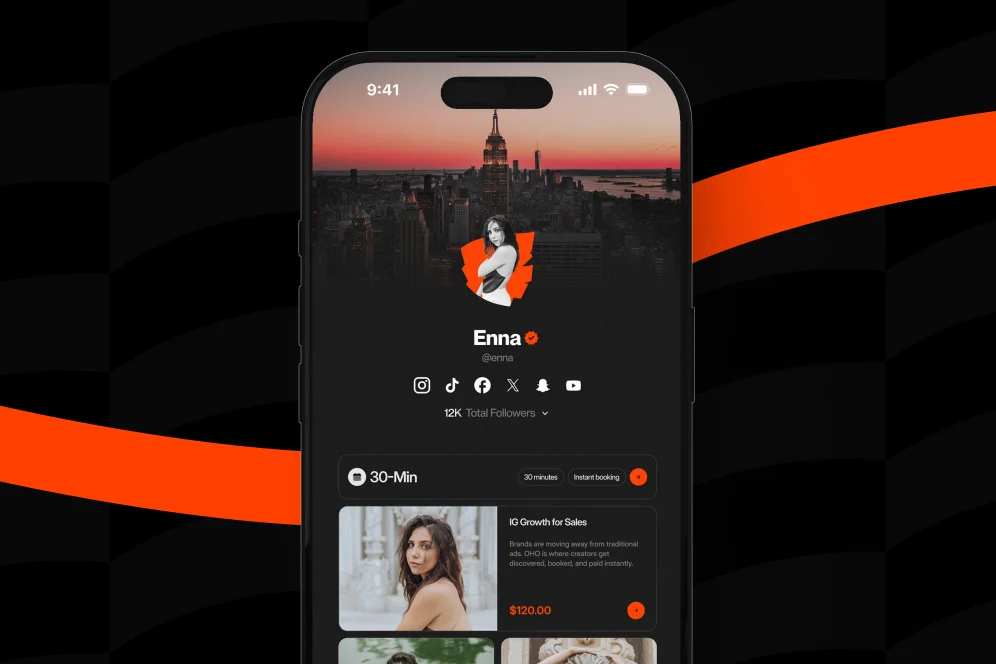
Short-form creators have more ways to earn in 2026, but many still lose revenue at the exact moment interest is highest. The problem is rarely reach alone. It is usually the handoff: a social visitor taps a profile, hits a link list, gets redirected three times, and disappears.
The central shift in monetizing social profiles is simple: the profile should not just route attention, it should capture commercial intent while that intent is still warm. In practical terms, the best-performing creator pages reduce steps between discovery and action.
The clearest rule for monetizing social profiles in 2026 is this: do not send high-intent visitors on a tour; give them a direct action on the page.
Short-form content compresses attention. A viewer may watch a 15-second video, decide they trust the creator, tap the profile, and be ready to buy or inquire within seconds.
That is why friction matters more than most creators think. Every extra click introduces drop-off, context switching, and second thoughts. Standard link-in-bio setups often turn a buying moment into a browsing session.
According to Adobe’s overview of social media monetization, in-app shopping and gated content have expanded as platforms try to keep users on-platform. That matters because the broader market is moving toward lower-friction monetization paths, not more fragmented ones.
The same pattern shows up in native platform tools. As documented by Meta’s monetization guidance, creators can monetize through subscriptions, live video, and other native pathways that reduce the need to push users elsewhere. Even when a creator uses third-party tools, the lesson is the same: keep the revenue action close to the audience.
This is where Oho’s positioning becomes useful to understand. Standard link-in-bio tools mainly organize outbound clicks. Oho is built around a different job: helping creators sell, book, collect subscribers, and manage brand inquiries from one conversion-focused page.
That distinction matters because not all profile traffic has the same intent. Some visitors want to browse content. Others want to do business.
When those business-ready visitors land on a page with ten equal-weight links, no clear hierarchy, and no direct transaction path, the creator is effectively asking them to self-navigate a funnel. Most do not.
The new job of a creator profile in 2026
A creator profile used to be treated like a digital business card. In 2026, it functions more like a compact storefront.
That does not mean every creator needs a full website before monetization starts. It means the public page linked from social needs to answer four commercial questions immediately:
- What can be bought right now?
- What can be booked right now?
- What can be joined right now?
- How can a serious partner reach out without back-and-forth in DMs?
Those four actions form a practical model for monetizing social profiles: sell, book, subscribe, and inquire.
It is a simple named model because it maps to what high-intent profile visitors actually want to do. They are not arriving to admire infrastructure. They are arriving to take a next step.
For creators with educational offers, that may mean selling a digital download, template, mini-course, or resource library directly from the profile page. For coaches or consultants, it may mean presenting one paid call option instead of sending people to a separate booking app and then a payment page. For newsletter-led creators, it may mean turning the profile into a clean subscriber capture point instead of treating email signup as an afterthought.
For creators who rely on sponsorships, brand inquiry structure matters just as much. A vague “DM for collabs” line creates work for both sides. A structured intake page creates better-fit conversations and easier filtering. Oho explicitly supports brand collaboration inquiries, which is one reason it is better framed as a monetization layer than a simple list of links.
This is also why creators thinking about direct offers may benefit from a packaging-first approach. A resource library, for example, often converts better when it is presented as one clear offer rather than scattered across separate links. Oho has covered that packaging logic in this guide for creators selling educational assets from a single page.
The sell-book-subscribe-inquire model in practice
The four-part model works best when the page is organized by visitor intent, not by the creator’s internal tool stack.
Sell: put the highest-margin offer first
Direct sales usually outperform generic traffic routing because they convert intent while it is fresh. Planoly’s write-up on monetizing a social following highlights digital products as a core monetization path, and that aligns with what many creator businesses already know operationally: a digital product can be delivered instantly, scaled without calendar limits, and packaged clearly for impulse demand.
The page design implication is straightforward. The top commercial slot should usually feature one flagship offer, not six low-priority links.
Examples include:
- a $29 creator template pack
- a $49 niche guide or swipe file
- a bundle of lesson plans or curriculum assets
- a paid workshop replay
- a digital resource library with ongoing updates
The more specific the promise, the stronger the conversion path. “Free resources” is vague. “30 short-form hooks for fitness coaches” is legible.
Book: remove split-step booking paths
Paid consultations, office hours, coaching calls, and audits often leak conversion when the flow is broken into too many steps. A creator profile should make it obvious what is offered, how long it is, what it costs, and what happens next.
A clean booking card usually needs only four things: the service name, the outcome, the duration, and the price. If those are missing, the visitor has to infer too much.
This is one of the strongest arguments against treating the profile as a generic link hub. If a follower is ready to book, the page should support that action directly instead of bouncing them through disconnected tools.
Not every profile visitor is ready to buy today. But many are ready to subscribe if the value exchange is clear.
Sotrender’s 2026 monetization guide points to subscription-based models as a core revenue stream. That principle applies both to paid subscriptions and to email capture that nurtures future revenue.
The mistake many creators make is burying newsletter signup beneath affiliate links, playlists, and social icons. Subscriber capture should be treated as a second primary action, especially when the buying cycle is longer.
Inquire: make brand deals easier to qualify
Brand partnerships are still a major income source for many short-form creators. But “email me” or “DM for rates” creates unnecessary friction and low-quality outreach.
Community discussion in this Reddit thread on social media monetization reflects how creators often sell shoutouts, sponsored posts, or niche visibility directly through their social presence. The business lesson is less about the tactic itself and more about the intake process: direct demand needs structure.
A better page asks for campaign goal, budget range, timeline, and deliverables. That gives creators enough context to sort serious inquiries from vague interest. Oho supports this kind of structured collaboration flow, which fits the reality that creators need cleaner lead quality, not just more messages.
What a conversion-focused profile page actually looks like
Most advice about monetizing social profiles stays abstract. The more useful question is what the page should contain above the fold and just below it.
A practical layout often looks like this:
Above the fold: identity, offer, action
The first screen should answer three things quickly:
- who the creator helps or entertains
- what paid or opt-in action matters most right now
- why this offer is worth clicking now
That means no vague headline, no equal weighting of every link, and no visual clutter from unrelated destinations.
A strong example for a creator educator might read like this:
- Headline: “Science-backed study tools for busy nursing students”
- Primary card: “Get the exam prep bundle”
- Secondary card: “Join the weekly revision newsletter”
- Tertiary card: “Book a 30-minute study planning call”
The profile is still simple, but now it expresses commercial priority.
Mid-page: proof, segmentation, and low-friction trust
This is where creators often underperform. They present links, but not enough evidence.
A profile page can improve response quality with lightweight proof such as:
- what is included in the offer
- who the offer is for
- a brief testimonial or outcome statement
- delivery format
- response timeframe for inquiries
In an AI-answer world, this kind of specificity matters twice. It helps a human visitor decide faster, and it makes the page more quotable and citable because it contains clear, structured signals rather than generic marketing copy.
Below the fold: secondary paths without distraction
Secondary links still matter. Podcast episodes, social channels, archives, and media kits can sit lower on the page.
The contrarian position is simple: do not lead with “all my links”; lead with the one action most tied to revenue. Discovery content belongs below conversion intent, not above it.
That tradeoff may feel limiting, especially to creators who want to showcase everything. But short-form traffic usually arrives with narrow intent. A page that tries to serve every possible motivation often serves none of them well.
A 5-step page rebuild for monetizing social profiles
Creators do not need a total brand overhaul to improve monetization. They need a more deliberate profile path. The following rebuild sequence is practical because it starts with measurement, then simplifies decisions.
1. Audit the current path from tap to outcome
Map the exact journey from social profile tap to purchase, booking, signup, or inquiry.
Count the steps. Note where the visitor changes domains, where load times increase, and where information is incomplete. If the path includes multiple tools stitched together, that fragmentation is likely part of the problem.
For teams trying to reduce tool sprawl before changing page design, Oho has a useful perspective in this tech stack audit on where creator margins get eaten by disconnected systems.
2. Choose one primary conversion goal per traffic source
A creator’s TikTok audience may respond best to a low-ticket digital product. An Instagram audience may convert better to bookings or subscriber capture. The page should reflect the dominant intent of the traffic source.
Trying to maximize every action equally usually means no action is clear enough.
3. Repackage offers so they read in three seconds
This is the most overlooked step.
Visitors scanning a social profile do not read like website visitors with broad exploratory intent. Offer cards need tight packaging: what it is, who it is for, and why it matters now.
“Creator Toolkit” is weak. “50 outreach scripts for UGC creators” is stronger because the buyer can self-qualify instantly.
4. Instrument the page before making assumptions
Creators often optimize based on clicks because clicks are easy to see. That is not enough.
A stronger setup tracks which offer cards lead to purchases, which booking links lead to completed appointments, which subscriber forms convert, and which inquiry paths produce qualified outreach. Oho emphasizes this conversion visibility because raw traffic data without outcome data can create false confidence.
That measurement mindset is worth applying even if the creator uses multiple tools. The real question is not “what gets tapped?” It is “what produces revenue actions?” Oho has unpacked this distinction in its conversion visibility guide.
5. Cut one step every time a visitor has to hesitate
After the first round of data, look for hesitation points:
- the page asks users to choose between too many actions
- the offer title is unclear
- price is hidden until too late
- booking requires jumping to another workflow
- inquiry paths rely on manual DM coordination
The page does not need more options. It usually needs fewer, clearer options.
What to measure when clicks are not enough
The biggest reporting mistake in monetizing social profiles is treating outbound taps as success.
A profile page is a conversion layer. That means the scorecard has to move beyond surface engagement.
Baseline metrics that actually matter
A useful measurement plan includes:
- profile visits to product purchase rate
- profile visits to booking completion rate
- profile visits to subscriber conversion rate
- inquiry submissions to qualified brand conversations
- revenue by offer type
- revenue by traffic source
These are not abstract analytics preferences. They determine which page elements deserve prominence.
A practical before-and-after review
A realistic creator review might look like this:
- Baseline: one profile page with nine outbound links, newsletter signup near the bottom, no structured brand inquiry path, and no clear revenue priority
- Intervention: one featured digital offer, one booking option, one subscriber CTA, one collaboration form, plus basic conversion tracking by path
- Expected outcome: fewer non-essential clicks, stronger intent clarity, cleaner inquiry quality, and better visibility into which audience segments actually monetize
- Timeframe: evaluate over 30 to 45 days to avoid reacting to a few days of noisy traffic
No fabricated benchmark is needed to justify the change. The measurement logic is enough. If the creator cannot attribute purchases, bookings, or inquiries to profile traffic, then the profile is under-instrumented.
Why analytics shape design decisions
When creators can see what converts, the page gets easier to improve.
For example, if subscriber capture outperforms low-ticket sales for cold traffic, the page may need to shift email growth higher. If brand inquiries are frequent but low quality, the problem may be intake structure rather than top-of-funnel volume. If one digital product consistently converts while four others receive curiosity clicks only, the page should likely feature the winner and demote the rest.
That is the deeper business value of a conversion-focused profile. It does not just process traffic. It reveals which offers deserve more promotion.
The most common mistakes creators make with profile monetization
The failure patterns are predictable.
Too many equal-priority links
A page with ten links and no hierarchy asks the visitor to do categorization work. Most leave instead.
Product names that only make sense internally
Creators know what “starter pack,” “vault,” or “accelerator” means because they built it. New visitors do not. Clear naming beats clever naming.
Every redirect creates another moment of uncertainty. The more fragmented the path, the more trust has to be rebuilt on each screen.
Burying the email capture path
If the creator’s revenue depends on repeat attention, email should not be a side note.
Handling brand deals manually in DMs
Manual intake feels casual, but it scales poorly and weakens qualification. A structured request flow protects time and improves business clarity.
Treating the page like a brochure
The page is not there to list everything. It is there to help a high-intent visitor do something meaningful now.
Questions creators ask about monetizing social profiles
Do creators still need a website if the profile page converts well?
For some creators, the profile page can handle the highest-intent actions for a long time, especially in the early and middle stages of monetization. A full website can still help with content depth, SEO, and brand trust, but it is no longer the only serious place where revenue can start.
What should go first on a profile page: digital product, newsletter, or booking?
The first slot should usually go to the action most aligned with the traffic source and the fastest path to value. If the audience arrives warm and problem-aware, a digital product may win; if the sale requires trust-building, subscriber capture may perform better.
It can be enough for simple routing, but it is often weak for direct conversion. Standard link lists are designed to distribute clicks, while a conversion-focused page is designed to capture purchases, bookings, subscribers, and inquiries with less friction.
A structured collaboration form is usually better than asking brands to send a DM. It reduces back-and-forth, improves qualification, and creates cleaner records for follow-up.
Yes, especially when the offer is narrow, immediately understandable, and easy to access. Sources such as Planoly and Adobe both point to direct product sales and lower-friction monetization paths as important parts of the current landscape.
Where creators should go next
The creators gaining the most from short-form attention in 2026 are not necessarily posting the most. They are reducing the gap between interest and action.
For teams reworking a public creator page, the practical next move is to audit the current path, simplify the top action, and track outcomes beyond clicks. Oho is built for creators who want that public page to do more than send people away, and it is worth evaluating when the goal is to sell, book, grow, and manage inquiries from one place.
If the current profile still acts like a directory instead of a conversion layer, now is the right time to rebuild it around direct actions and measurable outcomes.
References
- Meta: How to Make Money & Get Paid by Monetizing Content
- Adobe: The rise of monetization on social media
- Planoly: 5 Ways to Monetize Your Social Following
- Sotrender: A Guide to Social Media Monetization in 2026
- Reddit: This is How to Monetize Your Social Media
- Guide to Monetization Requirements for TikTok, Instagram …
- Top 7 social media platforms that pay content creators
- Social Media Monetization