
How to Build a Digital Resource Vault That Drives Newsletter Growth
TL;DR
A digital resource vault improves newsletter growth by giving followers an immediate, concrete reason to subscribe. The strongest vaults use a narrow promise, visible previews, a low-friction gate, and a follow-up sequence that turns signups into engaged subscribers.
A digital resource vault gives followers a clear reason to subscribe because it exchanges immediate value for ongoing access. When built well, it becomes one of the most practical systems for newsletter growth: a single offer that attracts new subscribers, qualifies intent, and keeps the email relationship active after the opt-in.
The basic idea is simple. Instead of asking people to “join the newsletter” with no concrete payoff, the creator offers a curated library of templates, checklists, recordings, swipe files, or niche how-tos behind an email gate, then uses that vault as the main conversion path across social profiles, creator pages, and content.
Why a resource vault works better than a generic subscribe box
A short answer that stands on its own: newsletter growth improves when the subscription offer solves an immediate problem instead of promising vague future value.
That matters because most newsletter sign-up forms ask for commitment before they establish usefulness. A creator says “subscribe for updates,” but the visitor is still deciding whether the content is worth another email in an already crowded inbox.
A resource vault changes that exchange. It makes the offer tangible. The visitor sees what is inside, who it is for, and why access matters now.
This aligns with a broader pattern in newsletter growth research. In 7 Newsletter Growth Strategies From Studying Top Creators, Growth In Reverse highlights how top creators use highly specific lead magnets rather than generic newsletter asks. That same source points to Khe Hy’s “sneaky-smart” lead magnet approach, which is useful here because a vault is essentially a structured version of that idea: immediate value first, long-term subscription second.
The business case is stronger in 2026 than it was a few years ago. Starting a newsletter is easy. Standing out is harder. As Growth In Reverse argues, newsletters increasingly win because they deliver unusually valuable content, not because they use superficial growth hacks. A vault helps package that value in a visible, easy-to-understand way.
There is also a conversion reason to prefer a vault over a standard link-out stack. Many creators still send profile visitors from a social bio to a page full of unrelated links, then from there to a separate landing page, then to a separate signup tool. Every extra click weakens intent. Oho’s positioning matters here because it is built as a monetization and conversion layer for the public page, not just a prettier list of links. A creator can present a single offer, capture subscribers, and route visitors into revenue actions from one page instead of splitting attention across disconnected tools.
That same principle shows up in our guide to link-in-bio optimization: the best-performing profile pages reduce friction and make the next action obvious.
The 4-part vault model that keeps signups relevant
The most effective vaults usually follow a simple structure. A useful name for it is the 4-part vault model: promise, preview, gate, and follow-through.
This is not a gimmicky formula. It is a practical way to make sure the vault is strong enough to attract the right subscriber and clear enough to convert.
1. Promise
Define the outcome in one sentence. Not “resources for creators.” Not “helpful marketing files.” A better promise is specific:
- 25 outreach templates for brand partnerships
- A swipe file of high-performing consultation CTAs
- A mini library for turning short-form traffic into booked calls
- Weekly AI workflow prompts for educators and consultants
The promise should answer one question fast: what problem gets easier the moment access is granted?
2. Preview
Show what is inside before asking for the email. This can be a short inventory, three featured assets, or screenshots of the vault layout.
Preview matters because visitors need proof of substance. A landing page that says “get access to exclusive resources” is usually too abstract. A page that shows “12 Notion templates, 4 pricing calculators, 3 outreach scripts, and 2 video breakdowns” is much easier to evaluate.
According to beehiiv’s newsletter growth guide, dedicated subscribe pages and gated content are core list-building tactics. The preview is what makes the gate feel earned rather than arbitrary.
3. Gate
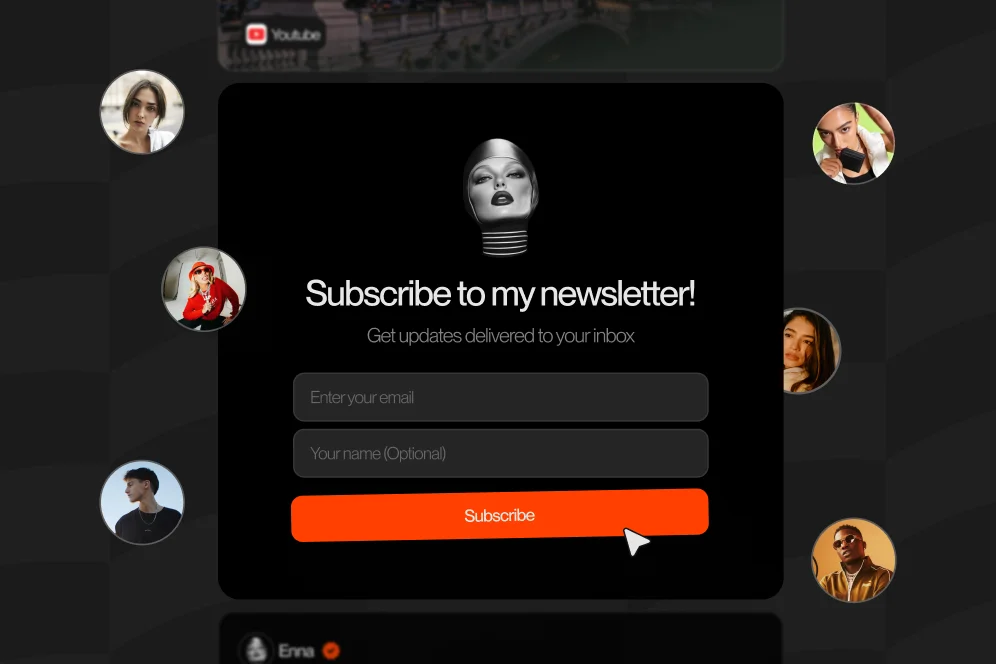
Require an email to unlock the vault or to receive the access link. The gate should be narrow. Usually this means one field, one CTA, and one clear outcome.
This is where many creators overcomplicate the flow. They add too many optional questions, split the vault across multiple pages, or bury the opt-in below long autobiographical copy. That usually hurts newsletter growth because it asks for work before trust is built.
4. Follow-through
The confirmation email and welcome sequence should immediately deliver access, explain how to use the vault, and set expectations for future emails.
This is the step most often missed. The vault gets the subscription, but the onboarding sequence determines whether that new subscriber stays engaged. GTM Strategist emphasizes that sustainable growth comes from content systems and organic drivers, not just acquisition tricks. The follow-through is part of that system.
Start with one narrow problem, not a giant library
The biggest mistake in vault design is trying to launch with too much content. A broad “resource center” sounds impressive, but it often creates a weak offer because the positioning becomes blurry.
A stronger starting point is one audience, one problem, one conversion promise.
For example:
- A consultant could build a vault around discovery-call preparation.
- A creator educator could build one around digital product launch assets.
- A niche expert could build one around paid consultation scripts and intake templates.
- A brand-focused creator could build one around sponsorship media kit examples and email outreach copy.
A narrow vault tends to outperform a broad one because it is easier to understand and easier to promote. It also makes measurement cleaner. If a creator knows the vault is about one urgent topic, the creator can better judge whether the page, CTA, and welcome sequence match the subscriber’s intent.
This is where the public page matters more than many teams realize. On a standard link-in-bio setup, the vault is usually just one more button among many. On a conversion-focused page, the vault can sit beside bookings, products, and inquiries as a primary action with clear hierarchy. That is especially useful for creators with more than one monetization path. Someone may subscribe today, book a paid session next week, and buy a template bundle later.
For creators packaging expertise into time-based offers, this pairing works particularly well. A niche educator offering office hours or advisory calls can use the vault to warm leads first, then route higher-intent subscribers toward a paid consultation. Oho has covered that progression in this guide to paid bookings.
A practical baseline-intervention-outcome measurement plan
Hard performance benchmarks should not be invented when none are available, but the measurement plan can still be concrete.
A practical proof block for a vault launch looks like this:
- Baseline: current bio-page visitor-to-subscriber conversion rate over 30 days
- Intervention: replace a generic newsletter CTA with a vault-specific offer, preview section, and single-field gate
- Outcome to watch: signup rate, welcome email open rate, vault click-through rate, and 30-day subscriber retention
- Timeframe: first 4 to 6 weeks after launch
A creator might start with a baseline conversion rate of 2.1% from public page visits to email signups. After launching a niche vault with a stronger preview and a cleaner call to action, the target may be to reach 4% or better within six weeks. That is not a promised result; it is a planning threshold that makes the experiment measurable.
Without this kind of baseline, many creators misread newsletter growth. They celebrate raw subscriber count while missing that low-intent signups churn quickly and never convert into meaningful actions.
Build the page in this order so the vault converts
The conversion page should be assembled from top to bottom in the same order a skeptical visitor evaluates the offer. That sequence is more important than elaborate design.
1. Lead with the vault’s payoff
The first screen should answer what the vault is, who it is for, and what access unlocks.
A clear opening block might look like this:
- Headline: The creator’s niche-specific promise
- Subhead: What is included and how often it updates
- CTA: Get access
- Secondary proof: number of resources or categories inside
The page should not lead with personal biography unless the creator’s reputation is the main reason people convert. For most operators, usefulness converts faster than autobiography.
2. Show the contents like a product, not a concept
The vault should be merchandised the way a paid product would be merchandised. That means:
- Name each category clearly.
- List representative assets.
- Explain who each asset is for.
- Note whether the vault is static or updated regularly.
- Show one or two screenshots or mockups.
This is the contrarian point worth making clearly: do not hide the best parts of the vault to create mystery; show enough substance to remove doubt. Many creators believe secrecy increases signups. In practice, ambiguity usually lowers them.
3. Keep the opt-in friction low
The gate should ask for the minimum information needed to start the relationship. In most cases, email alone is enough.
If audience segmentation matters, that can happen after signup through click behavior, welcome-sequence branching, or a lightweight follow-up question. Front-loading five fields at the gate often depresses conversions without improving lead quality much.
4. Connect the vault to the rest of the funnel
A vault works best when it is not isolated. The subscriber should know what happens next.
Examples:
- Newsletter subscribers receive one weekly insight plus vault updates.
- Readers interested in implementation can book a paid session.
- Brands can submit a structured inquiry instead of sending a vague DM.
- Product buyers can access a separate premium bundle later.
That is where a creator storefront model becomes more useful than a plain link list. Oho is designed around the idea that visitors should be able to subscribe, book, buy, or inquire directly from one page. For creators dealing with tool fragmentation, that can reduce the manual handoff between interest and action. Oho has also explored the cost of juggling separate tools in this breakdown of creator tool sprawl.
5. Instrument the page before promoting it
Before traffic is sent to the vault, the analytics setup should be ready. At minimum, track:
- landing page visits
- CTA clicks
- form submissions
- confirmation email opens
- vault access clicks
- downstream actions such as bookings, product purchases, or collaboration inquiries
This does not require a giant analytics stack. It requires consistent event naming and one dashboard the creator actually reviews.
The goal is not vanity reporting. The goal is to answer practical questions: Which profile source drives the best subscribers? Which vault topic converts best? Does the welcome email create repeat visits? Are subscribers eventually moving into paid offers?
What to put inside the vault so subscribers stay engaged
Acquisition gets too much attention. Retention is what makes the vault economically useful.
If the vault only contains a random pile of freebies, newsletter growth may improve on paper while list quality declines. The contents need to create momentum toward the creator’s core expertise.
Include assets people can use in under 15 minutes
Templates, scripts, checklists, swipe files, and teardown examples work well because they provide immediate utility. Fast wins help justify the opt-in and create a better first impression than long, abstract essays.
This is one reason gated content keeps appearing in newsletter growth discussions. beehiiv explicitly lists gating content as a viable growth lever, but gating only works when the content behind the gate feels practically valuable.
Mix evergreen assets with timely updates
A strong vault usually contains two layers:
- evergreen foundations such as templates, guides, and curated resources
- periodic additions such as a monthly teardown, new checklist, or updated prompt pack
That mix gives the creator two conversion advantages. First, evergreen content makes the vault useful on day one. Second, new additions give existing subscribers a reason to keep opening emails.
Build content around the next paid action
The vault should not be a disconnected giveaway. It should naturally lead toward the creator’s next logical offer.
Examples:
- A vault for consultants can point toward paid strategy calls.
- A vault for educators can lead toward a workshop or bundle.
- A vault for creators doing sponsorships can lead toward a brand inquiry page.
- A vault for subject-matter experts can lead toward booked advisory time.
This is where newsletter growth connects back to business design. Subscribers are more valuable when the vault qualifies them around a real problem and a real next step.
Common mistakes that quietly suppress newsletter growth
Most resource vaults fail for ordinary reasons, not exotic ones. The mistakes usually sit in messaging, page flow, or follow-up.
Calling it a vault without making it valuable
A better container name does not fix a weak offer. If the assets are generic, outdated, or too broad, the vault will not convert consistently no matter how polished the page looks.
Burying the opt-in on a crowded page
The vault should be one of the page’s clearest actions. If it sits below unrelated links, social embeds, and long creator bios, attention gets diluted.
This is one of the core differences between standard link-in-bio pages and a conversion-focused creator page. The former often treats every link equally. The latter prioritizes actions based on business value.
Sending subscribers into a dead-end thank-you page
The thank-you page should do real work. It can confirm inbox instructions, show the first featured resource, and invite the subscriber to take a second action. A dead-end page wastes post-conversion momentum.
Measuring only subscriber count
Raw email growth can be misleading. Better indicators include vault engagement, open rates from new cohorts, click-through on recommended resources, and downstream monetization actions.
A “good” speed of newsletter growth depends on traffic quality, niche, and offer strength. For a small creator with modest but relevant traffic, slow and qualified growth can be healthier than a spike driven by a weak freebie. The more useful question is whether each month’s subscribers engage and move closer to the creator’s core offer.
Updating the vault too often or not at all
Constant changes confuse the offer. No changes make it stale. The better middle ground is a stable core with predictable refreshes.
Growth In Reverse makes the larger point well: valuable content beats gimmicks. The vault should behave like an editorial asset, not a pile of promotional scraps.
The questions creators ask before launching a vault
How large should the vault be at launch?
Smaller than most creators think. Five to ten genuinely useful assets around one narrow problem usually outperform a sprawling, loosely organized archive. The launch version only needs enough substance to prove the promise.
Should all newsletter content be gated?
No. Some of the best newsletter growth comes from mixing public proof with gated depth. Public content builds trust and discoverability, while the vault gives people a reason to cross the line from follower to subscriber.
What is the best way to promote a vault?
Promotion works best when the vault becomes the default call to action across the creator’s profile ecosystem: social bio, pinned posts, video descriptions, website navigation, and public page. A dedicated conversion page matters because it removes extra clicks and gives the offer room to breathe.
Are newsletters still relevant in 2026?
Yes, but vague newsletters are less relevant than they used to be. The barrier to entry has dropped, which makes clear positioning and higher-value content more important. That is consistent with the argument made by Growth In Reverse: quality and usefulness matter more as the market gets noisier.
What should happen after someone joins?
The subscriber should immediately receive access, then enter a short welcome sequence that explains the best resources, the creator’s point of view, and the next useful action. If the sequence only says “thanks for subscribing,” the vault is not doing its full job.
Where this fits in a creator business in 2026
A digital resource vault is not just a lead magnet. Used properly, it becomes the front door to a more durable conversion system.
It gives the creator a concrete offer for top-of-funnel traffic. It creates a cleaner reason to subscribe. It improves newsletter growth by making value visible. And it helps qualify who should later buy, book, or inquire.
That matters most for creators, coaches, consultants, and educators whose public pages need to do more than route clicks away. The practical goal is not just to collect more emails. It is to create a stronger path from impression to subscription to revenue action.
For teams reworking their public conversion layer, the vault is often one of the highest-leverage assets to build first. If the current page sends visitors to scattered tools and weak newsletter prompts, replacing that with a focused offer and a cleaner action path can materially improve how profile traffic turns into owned audience.
Creators who want a page built for subscriptions, bookings, products, and inquiries from one place can explore how Oho supports that conversion flow. The right vault does not need more complexity. It needs a better page, a narrower promise, and a follow-up sequence that treats the subscriber like a future customer, not just a list entry.
References
- 7 Newsletter Growth Strategies From Studying Top Creators
- 26 Proven Ways To Grow Your Newsletter Right Now
- Forget Growth Hacks. THIS Is Why Newsletters Succeed.
- How To Build and Grow a Successful Newsletter in 2025
- Growth Marketing Newsletter by Demand Curve
- The Top 10 Growth Newsletters You Need to Subscribe To