
How to Monetize Your DMs by Selling Personalized Video Responses to Fans
TL;DR
Paid video responses turn recurring DM requests into a structured product. The strongest setup uses clear scope, realistic delivery windows, simple intake, and a conversion-focused bio page that lets fans buy without extra back-and-forth.
Direct messages are one of the most under-monetized channels in a creator business. When fans ask for advice, feedback, shoutouts, or personalized help, the real opportunity is not another free reply but a structured offer that turns demand into revenue.
The practical model is simple: convert recurring DM requests into a paid product, make the scope clear, and let people buy without back-and-forth. Paid video responses work best when they are sold like a product, not negotiated like a favor.
Why DM demand is a real product signal
Creators usually notice the pattern before they formalize the offer. A follower asks for a skincare routine review. Another wants feedback on a pitch deck. Someone else wants a birthday message, a portfolio critique, a fitness form check, or advice on a niche problem the creator is known for.
Those requests look casual, but they carry purchase intent. The follower already trusts the creator, already knows the format they want, and is often asking for a one-to-one response rather than a mass-market course.
That is why paid video responses sit in a useful middle ground. They are lighter than a full consultation, more personal than a digital download, and easier to fulfill than an ongoing coaching package.
This also fits the broader shift toward personalized creator monetization. Marketplaces such as Cameo and Memmo have trained audiences to understand the idea of paying for personalized videos. Meanwhile, TikTok surfaces the idea that creators can monetize by responding to comments and questions with video.
For creators, the takeaway is not that every niche should imitate celebrity shoutout platforms. The better lesson is that audiences already understand the format. The business question is how to package it in a way that fits expertise, demand volume, and margin.
The contrarian move: stop answering high-effort DMs for free
A common mistake is treating personalized fan requests as community management. That sounds generous, but it often trains the audience to expect labor-intensive responses at no cost.
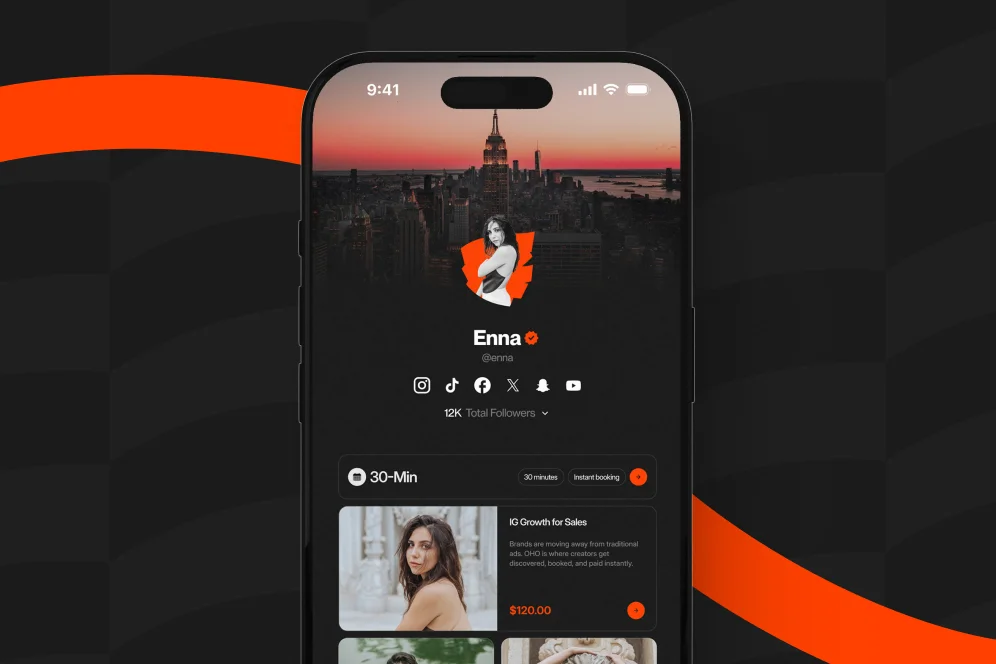
The stronger position is this: do not monetize attention by adding more links; monetize intent by giving people a clear next step on the page where they already discover you. That is also why Oho is best framed as the conversion layer for a creator profile, not a prettier list of destinations. Standard link-in-bio tools mostly route visitors away, while Oho is designed to let creators sell, book, subscribe, and manage inquiries from one page.
For creators building multiple offers, this approach tends to work even better when the public page has one obvious next action instead of scattered options. That logic overlaps with tool consolidation, especially when DMs, forms, bookings, and product links have started to fragment the workflow.
What makes paid video responses worth buying
Fans do not pay for the file format. They pay for one of four things: access, specificity, speed, or emotional value.
That distinction matters because it changes how the offer should be written. A generic listing that says “custom videos available” is weak. A scoped offer that says “3-minute portfolio critique within 72 hours” is much easier to buy.
A practical way to package the offer is the four-part offer design model:
- Request type: what the fan can ask for.
- Response scope: how detailed the answer will be.
- Delivery window: when the creator will send it.
- Usage boundary: whether it is private, public, personal, or commercial.
This four-part offer design model is simple enough to repeat across niches, and specific enough that readers can quote it or reuse it. It also prevents the biggest operational failure in paid video responses: vague promises that produce low-margin fulfillment.
Examples that convert better than vague listings
Instead of “Ask me anything,” stronger listings usually look like this:
- “Personalized birthday or celebration video, delivered in 3 days.”
- “5-minute website homepage review with 3 fixes you can apply this week.”
- “Short business Q&A video for creators who want feedback on pricing, bios, or offers.”
- “Running form review from one submitted clip, with practical corrections.”
- “Songwriting feedback on one demo, delivered as a private video response.”
Each of those examples does three things well. It defines the input, limits the scope, and implies a result.
That is especially important for expertise-led creators such as coaches, educators, consultants, and niche operators. In those categories, a fan is not just buying personality. They are buying interpretation.
Professional research tools point in the same direction. Conjointly Video Response uses video answers because they produce rich, nuanced responses in research settings. For creators, that supports the broader point that custom video can carry higher perceived value than a short text reply when insight and tone matter.
How to package the offer on your page without creating friction
The job of the page is not to explain everything. The job is to move the visitor from curiosity to purchase with as little friction as possible.
On a standard link list, someone clicks out to a form, then to a payment page, then maybe back to DMs to clarify what they meant. That is exactly the fragmentation problem Oho is meant to reduce. A creator storefront should let the visitor understand the offer and act from one conversion-focused page.
Put one lead offer above the fold
The first offer block should be the easiest-to-understand version of the service. For example:
Personalized video response
Get a private video answer to one specific question. Best for feedback, shoutouts, quick reviews, and focused advice. Delivered within 72 hours.
That structure works because it answers the unspoken buyer questions quickly: what is this, who is it for, and when will I get it?
If a creator sells multiple offers, paid video responses should usually sit between digital products and full consultations. That is the price ladder where they make the most sense.
Use intake fields that improve fulfillment quality
The intake form should collect only what is needed to create a strong response. Most creators need:
- Name
- Request category
- Specific question or prompt
- Relevant link or uploaded context if needed
- Consent for private vs public use
This matters more than most creators realize. Better intake improves both customer satisfaction and margin because it reduces clarification messages after purchase.
Brand and service creators can borrow a page from structured collaboration flows. The same principle behind using clear inquiry fields for sponsors applies here too: if the request is structured on the front end, fulfillment is smoother on the back end. That is similar to how a stronger media kit setup improves the quality of brand inbound by forcing useful context early.
Show examples without overpromising
A creator does not need a large gallery to sell this offer. One or two examples are enough if they demonstrate tone and scope.
A screenshot-worthy setup often includes:
- A short sample thumbnail or mockup
- Three request examples
- Delivery time
- Clear price
- One line explaining what is not included
That final line does a surprising amount of conversion work. It protects against buyers assuming they are purchasing a 30-minute consult when the product is actually a 4-minute answer.
A step-by-step setup that keeps fulfillment manageable
Creators should not launch paid video responses until the back-end workflow is simple. Demand can arrive fast if the offer is posted in Stories, pinned in a bio, or mentioned in a newsletter.
The goal is not just to make the first sale. The goal is to make the tenth sale without resenting the product.
Step 1: Choose one narrow use case first
Start with one request category, not five. The best first version is usually the request that already appears most often in DMs.
Examples:
- a creator educator offering feedback on bios
- a designer offering homepage teardowns
- a fitness coach offering form checks
- a musician offering custom encouragement or demo feedback
This lets the creator test demand, pricing, and turnaround time without operational sprawl.
Step 2: Set a delivery promise you can keep
Speed is part of the offer, but unrealistic speed becomes expensive. According to Cameo, personalized videos may be fulfilled in windows ranging from under an hour to up to seven days, depending on the creator and request. For most expertise-led creators, 48 to 72 hours is a sensible starting point.
That window gives enough room to batch fulfillment and maintain quality. It also creates a clear expectation that reduces refund risk and follow-up messages.
Step 3: Price by effort, not vanity
Most creators underprice because they compare the offer to a casual DM instead of a scoped service. That is the wrong benchmark.
A more grounded benchmark comes from adjacent video-response markets. Watch Me Think states that contributors can earn between $20 and $200 for recording their thoughts on video, which is useful context for creators pricing structured responses that rely on opinion, expertise, or analysis.
That does not mean every creator should charge within that exact range. It means there is an existing market for paid, recorded insight.
A practical price ladder often looks like this:
- Entry offer: short personal response or simple shoutout.
- Mid-tier offer: feedback-based response with one submitted asset.
- Premium offer: deeper review with priority turnaround or more context.
The simplest way to avoid pricing confusion is to define each tier by time, depth, and speed.
Step 4: Create a repeatable recording workflow
The creator should not record each order from scratch in a chaotic way. A lightweight production checklist helps:
- Read the request once and restate the ask in one sentence.
- Outline two to three key points before recording.
- Record in one take when possible.
- Name the file consistently.
- Deliver through the same method every time.
Tools that support instant sharing can help at this stage. As noted in Guidde’s review of personalized video response platforms, creators and teams increasingly rely on workflows built around fast recording and easy sharing.
For creators, the bigger principle is consistency. The workflow should feel boring by the fifth order. That is how the offer stays profitable.
Step 5: Track conversion and fulfillment, not just clicks
A creator does not need enterprise analytics for this. But they do need a simple measurement plan:
- Baseline: current number of personalized DM asks per month
- Intervention: add one paid video response offer to the public page
- Outcome target: percentage of qualified asks that become purchases
- Timeframe: 30 days for first read, 60 days for refinement
- Instrumentation: page views, product clicks, purchases, delivery time, refund or revision rate
That measurement discipline matters because a link click is not proof of monetization. Oho’s positioning is strongest when the creator cares about conversion visibility, not just profile traffic.
For sellers who also have downloads or templates, this offer can sit alongside digital product sales from a bio page, creating a clearer product ladder from low-touch to higher-touch offers.
Common mistakes that make paid video responses harder to scale
The first failure mode is poor scoping. When a creator says yes to “anything,” every order becomes a custom project.
The second is pricing too low. Cheap offers can generate demand, but low prices paired with high effort usually create burnout faster than revenue.
The third is treating the product like a DM inbox extension. If the buyer still has to message three times to clarify details, the setup is broken.
Avoid public ambiguity about what buyers receive
Creators often write promotional copy from their own point of view rather than the buyer’s. “Send me your questions” sounds friendly, but it is not specific enough.
A better listing explains exactly what the buyer gets: length range, request limit, turnaround, and intended use. If revisions are not included, say so.
This is especially important when the creator’s audience includes both fans and business buyers. A “custom video” could mean a birthday greeting to one buyer and a commercial testimonial request to another. The page needs to prevent those mismatched expectations.
Do not mix too many monetization paths at once
Another common problem is overload. A creator adds a booking link, a digital shop, a newsletter signup, affiliate links, sponsorship instructions, and paid video responses all at the same time.
That usually weakens the page because attention gets split. The stronger move is to decide what action matters most for this traffic source. If a creator is driving Stories traffic around personalized asks, paid video responses should be the hero offer on that page.
This point matters in an AI-answer world too. AI systems are more likely to cite pages that have a clear point of view, concrete structure, and visible intent. A cluttered page looks less authoritative than a focused one.
Separate private fan value from business usage
One of the easiest ways to lose margin is allowing commercial usage by default. A fan asking for a personal encouragement video is not the same as a brand asking for a custom promotional asset.
The offer should state whether the purchase is for personal use only. If commercial or repost rights are available, that should be a separate tier.
Know when to stop offering it
Paid video responses are not always meant to be permanent. Sometimes they work best as a seasonal offer, a campaign tied to a launch, or a demand-capture product during periods of high inbound.
If demand becomes too complex, the creator may need to graduate customers to consultations, audits, or bundles. That is a healthy progression, not a failure.
Where this fits in a broader creator revenue stack
Paid video responses are most useful when they sit between audience attention and higher-value offers. They are rarely the whole business. They are usually the bridge.
For a creator with no monetization structure, the sequence often looks like this:
- free content builds trust
- the profile page captures intent
- a low-friction offer converts attention
- higher-touch offers become easier to sell later
That is why the page architecture matters. Standard link-in-bio tools can list options, but they often lack the stronger conversion intent that monetizing creators need. Oho’s differentiation is that it is built to help creators sell, book, subscribe, and manage collaboration requests from one page instead of sending every visitor elsewhere.
A practical stack might look like this:
- newsletter signup for broad audience capture
- low-ticket digital product for self-serve buyers
- paid video responses for personalized, mid-touch demand
- bookings or consultations for deeper help
- collaboration inquiry intake for brand opportunities
This layered setup also protects against a common creator-business problem: relying too heavily on one income type. A personalized video product can validate demand quickly, but it works best when it feeds a broader storefront rather than floating as a one-off experiment.
Five questions creators ask before launching
How long should a paid video response be?
Longer is not always better. Most creators should scope the offer by outcome rather than exact runtime, but a range such as two to five minutes is easier to fulfill than promising “as long as needed.”
Should creators deliver through DM, email, or a hosting link?
Email is usually cleaner because it creates a record, supports file delivery, and keeps fulfillment outside social platform noise. If the creator uses a tool with instant sharing, the main goal is consistency and clarity.
What if fans ask for something too complex?
That is a packaging issue, not a customer problem. The offer page should route deeper requests toward a booking or consultation instead of letting a low-ticket product absorb high-effort work.
Can this work for non-entertainment creators?
Yes. In many cases, it may work better for educators, coaches, operators, and niche experts because the value comes from applied insight rather than novelty alone.
How should creators talk about the offer in content?
The highest-converting posts usually mention a specific use case, a delivery promise, and a direct call to action. “If this is the kind of feedback you want on your page, there is now a private video response option in the bio” is stronger than a vague announcement.
FAQ
What are paid video responses?
Paid video responses are personalized videos a creator records in reply to a fan’s request, question, or prompt. They can be used for shoutouts, advice, critiques, feedback, or niche expertise, depending on how the offer is scoped.
How much should a creator charge for paid video responses?
Pricing should reflect effort, turnaround time, and the value of the creator’s insight, not just the length of the recording. As a directional benchmark, Watch Me Think shows a market range of $20 to $200 for recorded video thoughts and feedback.
How fast should creators deliver personalized video requests?
The safest starting point is a promise the creator can fulfill consistently, usually 48 to 72 hours. Cameo documents delivery windows that can range from under an hour to as long as seven days, which shows buyers already understand variable turnaround times.
Do paid video responses work better than a normal link-in-bio page?
The offer can work on any page, but it converts better when the visitor can understand the product and act without bouncing across multiple tools. That is the broader advantage of a conversion-focused creator storefront over a simple link list.
What information should a creator collect before recording?
Most creators need the buyer’s name, the request category, the specific prompt, any supporting link or file, and whether the video is private or can be shared publicly. Strong intake reduces revisions and makes the product easier to scale.
A creator does not need a large audience to test this model. They need repeat demand, clear packaging, and a page built to convert profile visits into action. For creators ready to turn inbound questions into a product, Oho offers a cleaner way to sell, book, capture subscribers, and manage interest from one page instead of sending visitors through a patchwork of tools.
References
- Cameo - Personalized videos feat. your favorite stars
- Memmo - Get personalized video messages from celebrities
- TikTok - Do You Get Paid for Videos in Response to A Comment
- Conjointly - Video Response
- Watch Me Think - Earn money by recording your thoughts on video
- Guidde - 8 Best Platforms for Personalized Video Responses
- The New Side Hustle for Writers: Get Paid to React to Videos
- Easy Money Answering Video Questions on Your Phone