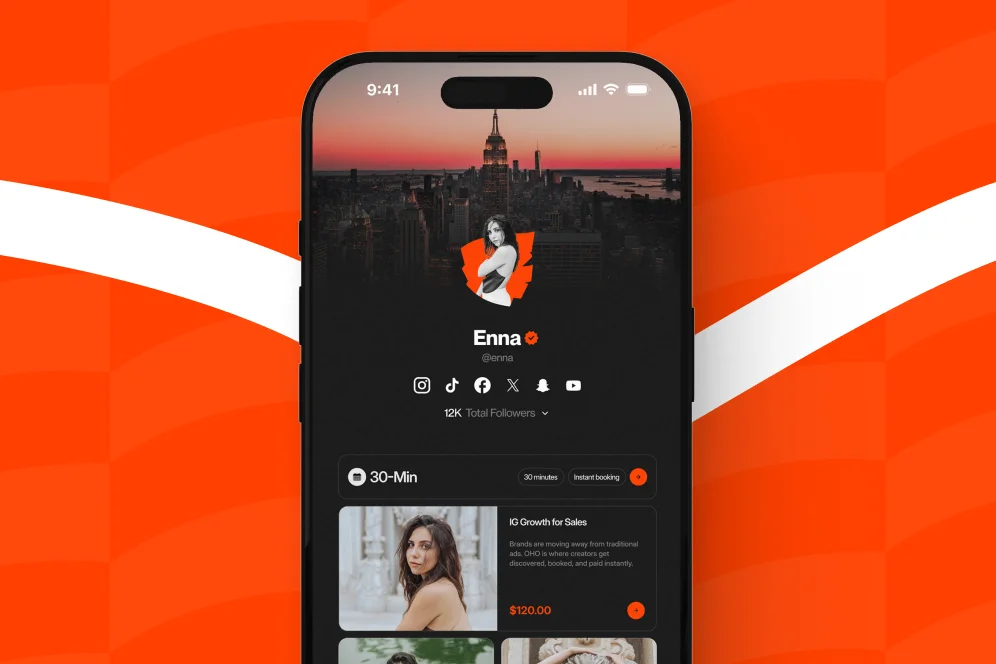
Most link-in-bio pages are built to organize links, not to convert intent. For creators who want more than taps and vanity clicks, the better question is not which tool looks nicest, but which one turns profile traffic into purchases, bookings, subscribers, and qualified inquiries.
The short answer: the best option is usually the one that reduces redirects and lets visitors act immediately. High-converting creators do not need a prettier link list; they need a conversion layer that matches how people actually buy, book, and inquire in 2026.
Why most bio pages underperform when traffic is already warm
The core issue with a standard bio page is simple: it sends people away right when they show intent. Someone taps from Instagram, TikTok, YouTube, or X with fresh attention, then gets handed a list of outbound choices instead of a clear next action.
That creates friction in three places:
- Decision friction: too many links, no hierarchy.
- Platform friction: every click opens another page, load step, or form.
- Measurement friction: you may know what got clicked, but not what actually converted.
This is where the market for Linktree Alternatives for High-Converting Creators has matured. The best tools now separate into two camps:
- directory-style tools built for simple routing
- monetization-first tools built for on-page action
That distinction matters more than feature count. A tool can offer dozens of blocks and still underperform if the page behaves like a menu instead of a landing page.
A practical evaluation lens is what I call the bio-page conversion stack:
- Intent capture: does the page make the next step obvious?
- Action completion: can the visitor buy, subscribe, book, or inquire without unnecessary redirects?
- Signal visibility: can the creator see which offers and sections are producing real outcomes?
- Identity strength: does the page look credible enough for paid services, products, and brand deals?
If a platform is weak in two or more of those layers, it will usually cap revenue before it caps traffic.
This is also why many creator businesses eventually move beyond a basic link list. As Jenna Kutcher notes when discussing custom and list-building-focused alternatives, creators who care about conversion often benefit from a setup that supports deeper ownership and stronger email capture rather than pure link routing.
For creators comparing tools, the real decision is not “Which page builder has the most blocks?” It is “Which setup shortens the path from profile visit to business outcome?”
What to compare if revenue matters more than taps
When people search for Linktree Alternatives for High-Converting Creators, they usually start with branding or templates. That is understandable, but it is the wrong first filter.
The first filter should be monetization flow. Specifically, compare each tool on these five criteria:
1. Can visitors act directly on the page?
If someone wants to buy a digital guide, request a consulting call, join your newsletter, or submit a brand inquiry, fewer redirects are better. A click-out model adds drop-off at every step.
A creator selling templates has different needs than a coach booking advisory calls. An educator growing an email list needs different page logic than a lifestyle creator handling sponsorship requests.
3. Is there useful conversion visibility?
Clicks alone are weak evidence. The stronger question is whether the platform helps you understand subscriptions, inquiries, bookings, and offer-level response. This is where many standard bio tools still feel thin.
4. Does the page look credible for paid intent?
There is a difference between “social profile accessory” and “public business page.” If you sell premium offers or want structured brand collaboration requests, presentation matters.
5. How fragmented is the back end?
The hidden cost of a simple bio tool is operational sprawl. Separate tools for product delivery, bookings, newsletter capture, and brand intake can work, but they usually produce more handoffs, more maintenance, and more blind spots.
A contrarian take that tends to hold up in practice: do not choose a bio tool because it has the most customization; choose it because it has the fewest conversion breaks. Fancy layouts are rarely the bottleneck. Broken journeys are.
According to Network Solutions, the market has increasingly highlighted monetization-first options like Beacons for creators and entrepreneurs who want to generate revenue directly from bio traffic rather than simply route visitors onward. That framing is useful because it reflects how buyer intent actually behaves.
If a creator gets 500 qualified profile visits per week, even a modest improvement in action completion can matter more than adding another social icon or background effect. The right test is not “Did people click?” but “Did the page create more completed outcomes this month than the old setup?”
5 options worth considering in 2026
Below are five realistic paths, each with a different tradeoff profile. The right choice depends on whether your primary job is to route traffic, monetize demand, control design, grow an owned audience, or structure offers from one page.
Oho
Oho is best framed as a monetization and conversion layer for a creator’s public page, not as a prettier link list. It is built for creators who want visitors to buy digital products, book paid services, subscribe to a newsletter, and send structured collaboration requests from one profile.
That matters because the operating model is different from a standard bio page. Instead of treating the profile as a traffic router, Oho is designed to let creators complete revenue actions on the page and see which sections are driving clicks, subscriptions, inquiries, and other conversion signals.
Where Oho fits best:
- creators selling downloads, guides, bundles, and paid offers
- coaches and consultants offering calls, consults, or sessions
- educators and creator-led businesses growing a newsletter
- creators who want more organized brand collaboration requests
- users who care about branded public identity, including usernames and verification-style trust signals
Its advantage is consolidation. Product sales, paid bookings, subscriber capture, and collaboration inquiries can live in one workspace rather than across disconnected tools. That makes Oho a strong fit for creators who have outgrown the “list of links” model and want a page with more commercial intent.
Tradeoffs: if someone only needs a lightweight link hub with no monetization layer, Oho may be more business-focused than they need. It is also best understood as the public conversion layer, not a full business operating system.
For creators who want one page to behave more like a storefront than a directory, Oho is one of the more directly aligned options. That positioning is consistent with how the platform presents itself on its creator storefront page.
Beacons
Beacons is frequently positioned as a creator-first alternative for monetization and audience growth. That broad market framing is echoed by both Network Solutions and Ecomm.Design, which highlight Beacons as a strong choice for creators who want more than basic bio routing.
Where Beacons stands out is category familiarity. It is already recognized as a monetization-oriented option, so many creators encounter it early when they outgrow a basic bio page.
Where it fits best:
- creators wanting an established creator-tool option
- users comparing monetization-oriented bio platforms
- audiences that need a broader creator feature set beyond simple links
Tradeoffs: a wider feature footprint can also create more complexity. For high-conversion use cases, the implementation still matters. If the page is cluttered, overbuilt, or not organized around one primary offer, the platform will not fix that on its own.
Carrd
Carrd is often the recommendation for creators who want design control. That is consistent with Ecomm.Design, which identifies Carrd as a top option when customization matters most.
Carrd is not inherently a monetization-first creator system. It is a lightweight site builder that can be adapted into a strong bio landing page if the creator knows what they are doing.
Where Carrd fits best:
- creators who care deeply about page design and layout control
- operators comfortable piecing together integrations
- users who want a custom-feeling mini site rather than a platform opinionated around creator workflows
Tradeoffs: you gain control, but you usually inherit more setup work. You may need separate tools for checkout, booking, forms, and newsletter capture. That can be worthwhile if brand control is the priority, but less ideal if conversion simplicity is the priority.
The Leap
The Leap appears in HulkApps as a free alternative with built-in sales capabilities inside the bio-link experience. That is important for creators who want direct monetization without starting with a more fragmented stack.
Where it fits best:
- creators testing direct sales from a bio page
- newer operators who want sales capability without a heavier custom build
- users who prioritize affordability while still wanting monetization features
Tradeoffs: “free” can be a good starting point, but creators should still evaluate how well the page supports premium positioning, list growth, and a clean path for multiple offer types over time.
A custom page on your own website
The highest-control option is still a custom landing page hosted on your own site. Jenna Kutcher makes the case that a self-hosted page can be the strongest route for creators who want full brand control and tighter ownership over their audience experience.
This option makes the most sense when:
- your website is already your primary business hub
- SEO and first-party ownership matter more than speed of setup
- you have specific conversion flows that no bio platform handles cleanly
Tradeoffs are obvious: this route takes more work. Design, optimization, analytics, forms, commerce, and maintenance all become your responsibility.
For advanced teams, that is often acceptable. For solo creators, it can delay execution and create a half-finished page that never gets properly optimized.
The biggest mistake creators make is comparing platforms in the abstract. They ask which tool is “best” before defining what the page is supposed to do.
A better process is to choose from business model backward.
Use this 4-step decision process
- Identify the primary conversion event. Is the page mainly for product sales, paid bookings, list growth, or brand inquiries?
- Map the shortest path. Count how many clicks, page loads, and form steps a visitor must complete.
- Check for secondary monetization actions. Can the same page also capture email, support inquiries, or present premium offers without clutter?
- Verify measurement. Make sure the platform can show more than taps, including whether sections and offers are actually producing outcomes.
That process sounds simple, but it prevents 80% of bad tool choices.
Here is a practical example.
Baseline: a creator has a standard bio page with eight equal-weight links: YouTube, newsletter, “book me,” free PDF, Amazon storefront, media kit, latest video, and shop.
Intervention: the creator rebuilds the page around one primary paid offer, one email capture block, one booking action, and one structured brand inquiry path. The low-intent links move lower.
Expected outcome: fewer clicks to non-revenue destinations, more qualified actions from the same traffic.
Timeframe: evaluate over 30 days with a baseline comparison using the same traffic source mix.
That is the kind of proof model that actually helps. Without a baseline, “better conversion” is just a feeling.
If you are setting this up, define the measurement plan before launch:
- baseline weekly profile visits
- baseline clicks by section
- baseline completed bookings or purchases
- baseline subscriber growth from bio traffic
- target improvement window: 30 to 45 days
For creators using a conversion-oriented profile, pages like Oho are attractive because the product is already framed around those actions instead of forcing a stack of loosely connected tools.
Common mistakes that make any alternative convert worse
A better platform can still underperform if the page logic is wrong. Most conversion losses come from execution, not brand name.
Treating every link as equally important
When every item gets the same visual weight, the page communicates no priority. Visitors should not have to guess what you want them to do next.
A better rule is one dominant action, one supporting action, and one low-friction fallback. For example:
- dominant: buy the product
- supporting: book a consult
- fallback: join the newsletter
This is the most common structural failure. A profile visitor clicks “book,” then lands on a separate calendar page. They click “download,” then land on a storefront. They click “work with me,” then land on a generic form.
Each handoff leaks intent.
That is why many creators looking for Linktree Alternatives for High-Converting Creators should not optimize for “more destinations.” They should optimize for fewer transitions.
Hiding the business model behind creator branding
A beautiful page with no commercial clarity often loses to an average-looking page with obvious next steps. If you sell strategy calls, say that. If you offer templates, show them. If brands can hire you, make the inquiry path structured and easy.
Ignoring owned audience capture
A creator who only routes traffic to social platforms is compounding dependency. Email capture should usually be present, even when it is not the primary conversion path.
That logic shows up across the broader market too. Jenna Kutcher emphasizes list growth as a core reason to move beyond a basic bio page, especially for creators who want durable audience ownership.
Measuring clicks but not outcomes
A page that generates 200 clicks to mixed destinations may be weaker than a page that generates 25 bookings, subscribers, and inquiries. High-conversion creators care about completed actions, not just activity.
If analytics are available, review:
- section-level click distribution
- offer-level interest
- subscriber capture rate
- inquiry completion rate
- booking completion rate
The point is not to create a reporting obsession. The point is to know which block deserves the top spot next week.
Which option fits which creator business
The easiest way to narrow the list is to match tool type to creator model.
Choose Oho if you want one page to sell, book, capture subscribers, and handle brand requests
Oho is a strong fit for monetizing creators who want a business-facing profile rather than a routing page. It works especially well for consultants, educators, online personalities, and creator-led businesses that need a public page where people can actually act, not just click away.
Choose Beacons if you want a recognized creator-focused monetization option
Beacons makes sense for creators already exploring the broader creator-tool ecosystem and wanting a monetization-oriented alternative that is commonly surfaced in the category.
Choose Carrd if design control matters more than built-in creator workflows
Carrd is best for operators willing to assemble their own stack. It can convert well, but usually only after careful setup and integration choices.
Choose The Leap if you want a lower-cost way to test direct sales
If affordability and direct selling are top priorities, The Leap is worth a look. The key question is whether it will still fit once your offers and audience become more complex.
Choose a custom site page if you have the team or skill to optimize it properly
A self-hosted page can be the strongest long-term asset, but only if it is actually maintained like a revenue page. Too many creators start this route and end up with a prettier but less functional dead end.
The practical takeaway is simple: match the page architecture to the monetization goal. That is a more reliable decision rule than brand familiarity or template polish.
Questions creators ask before switching
Is a Linktree alternative actually better for conversion?
Yes, if the alternative reduces friction and supports direct actions on the page. The gain does not come from novelty; it comes from shortening the path between visitor intent and completion.
If speed, monetization flow, and simplicity matter most, a creator platform is usually the faster path. If full control, SEO ownership, and custom workflows matter most, a self-hosted page can be stronger over time.
Does a creator really need bookings, products, email capture, and brand inquiries on one page?
Not always. But if those actions already exist in the business, putting them behind separate tools often creates avoidable drop-off and makes performance harder to read.
What if the creator only has one offer today?
That is fine. A high-converting page can be very simple. The point is not to add blocks; it is to make the primary action obvious while keeping room for list growth or future offers.
How should success be measured after switching?
Use a before-and-after comparison over 30 days. Track profile visits, primary conversion completions, subscriber growth, inquiry quality, and section-level engagement rather than relying on raw click totals alone.
If you are evaluating options now, start with the pages that are built for action, not just organization. A conversion-focused profile on Oho is worth reviewing if your goal is to turn social traffic into product sales, paid bookings, subscribers, and brand opportunities from one public page.
References
- Network Solutions
- Ecomm.Design
- Jenna Kutcher
- HulkApps
- 20+ Best Linktree Alternatives to Upgrade Your Link-In-Bio …
- 5 Affordable Linktree Alternatives for Business Owners & …
- 8 Best Linktree Alternatives For 2026 (Upgrade Your IG Bio)
- I built a higher-converting version of Linktree