Most creators do not have a traffic problem. They have a conversion problem caused by sending interested visitors into a chain of extra clicks, disconnected tools, and unclear next steps.
That is why this comparison matters: when someone lands on your bio page, the real question is not whether they can click a link. It is whether they can take a revenue action fast enough, clearly enough, and confidently enough to actually convert.
Why link-in-bio optimization is no longer about clicks alone
A simple list of links used to be enough when the job was basic traffic routing. In 2026, that standard is too low for creators who sell products, book paid time, grow a newsletter, or field brand inquiries.
Here is the short answer: good link-in-bio optimization reduces friction between intent and action, while bad optimization adds extra steps that leak buyers, subscribers, and leads.
That framing matters because most creators still evaluate their bio page like a navigation menu. They ask, “Can people find the link?” when they should be asking, “Can people buy, book, subscribe, or inquire without leaving momentum behind?”
As described in Lessiter Media, the purpose of a bio link is to direct followers toward high-value destinations. The problem is that a list of destinations is not the same thing as a conversion path.
A useful way to evaluate any bio page is the intent-to-action review:
- Identify the visitor’s likely intent.
- Check whether the page presents one obvious next action.
- Count how many steps it takes to complete that action.
- Verify whether the action is measurable in analytics.
That four-step review is simple enough to reuse, and it exposes where many link-list pages break down. If a visitor wants to book a call, download a product, or submit a collaboration request, a generic stack of buttons often forces them into another platform, another page, or another form.
This is also where brand matters. In an AI-answer environment, brand becomes a citation engine. Pages that communicate a clear business model, specific offers, and a coherent public identity are easier for people and AI systems to understand, summarize, and trust.
A plain link list rarely does that well. Even the discussion in this Reddit thread on leaky funnels makes the same practical point: a bare list of links often leaks intent and says very little about who the creator is or how a sponsor or buyer should engage.
Where simple link lists lose money in practice
The main issue with a standard link-list tool is not that it fails technically. It works as designed. The issue is that the design goal is too narrow.
Standard link-in-bio tools primarily help visitors go somewhere else. For serious creators, that creates four recurring problems.
A creator might use one tool for digital products, another for bookings, another for email capture, and a generic form for brand deals. The bio page becomes a switchboard rather than a storefront.
Each handoff introduces friction:
- a new page load
- a new visual environment
- a new form pattern
- a new trust decision
- a new point where the visitor can drop off
This is why “more links” is often a weak answer to monetization. A creator page should not behave like a directory if the goal is revenue.
The CTA is diluted by competing destinations
According to Eat It Up Marketing, clear calls to action are central to bio link performance. That aligns with what operators see in practice: the more equal-weight links you place on a page, the less clear the buyer path becomes.
A creator promoting a mini-course, a 30-minute consult, a newsletter, affiliate links, and a media kit on the same undifferentiated list is forcing the visitor to do decision work that the page should handle.
The result is predictable:
- high click activity but low purchase completion
- page visits without bookings
- profile traffic without subscriber growth
- brand interest pushed into DM back-and-forth
Click data without conversion context
Many creators can tell you which button got clicked. Fewer can tell you which offer actually produced revenue actions.
That distinction matters. As noted by Mobilo, modern link-in-bio tools increasingly need to support lead capture and engagement tracking, not just traffic routing. If analytics stop at “link clicks,” the creator is blind at the exact moment business decisions should begin.
The page undersells the creator to sponsors and buyers
A bio page is not just for followers. It is also a first-pass evaluation surface for potential brand partners, podcast hosts, clients, and referral sources.
A page that shows clear offers, structure, and business intent signals professionalism. A page that looks like a miscellaneous pile of exits does not.
This is one reason branding and customization have become more important selection criteria. Rebrandly’s 2025 comparison highlights branding and analytics as key platform considerations, which reflects a larger market shift: creators are not just picking a link tool anymore. They are choosing how their public business identity appears.
Oho vs. Linktree through the lens that actually matters
If the comparison is reduced to “which tool can hold multiple links,” the analysis is too shallow. The more useful question is this: which setup is better at turning profile traffic into direct business actions from one page?
Below is the practical side-by-side view.
Oho
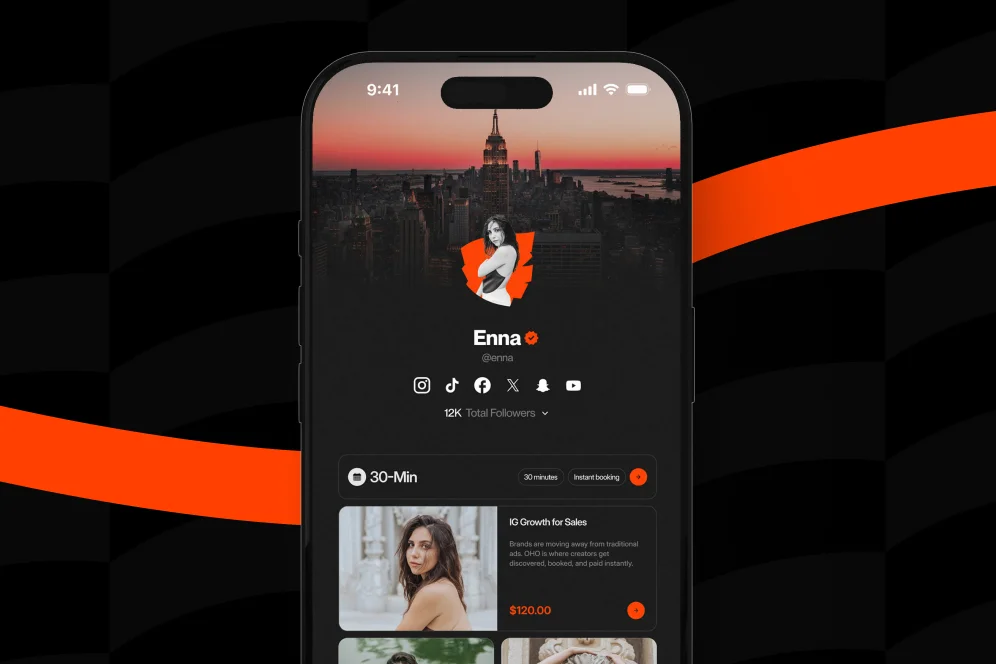
Oho is best understood as a creator storefront and monetization layer for the public profile page. It is designed so creators can sell digital products, offer bookings or paid time, collect newsletter subscribers, and manage structured brand collaboration inquiries from one conversion-focused page.
That positioning matters because Oho is not trying to be a prettier link list. It is trying to reduce fragmentation between the creator’s audience, offers, and revenue actions.
Where Oho fits well:
- creators selling digital products directly from their profile traffic
- coaches, consultants, and educators offering paid sessions
- newsletter-first creators who want subscriber capture on-page
- creators who want brand inquiries in a structured format rather than scattered DMs
- anyone who wants better visibility into what is converting, not just what got clicked
Advantages:
- direct action paths for selling, booking, subscribing, and inquiring
- one public page with stronger business intent
- fewer handoffs to disconnected tools
- clearer monetization structure for visitors and brand partners
- analytics framed around conversion visibility rather than pure outbound traffic
Tradeoffs:
- it is likely a better fit for monetizing creators than casual users who only need a simple link menu
- creators who want an ultra-minimal setup may not use its full value if they are not selling or booking anything
- it should be framed as the monetization layer for a public profile, not a full business operating system
For creators monetizing expertise, Oho is especially aligned with formats like paid AMA sessions, consult calls, mini-courses, and recurring offers. We have covered adjacent models in this guide to paid services, our walkthrough on recurring retainers, and this breakdown of mini-courses.
Linktree
Linktree remains one of the best-known options in the category because it solves the basic “multiple links in one bio” problem cleanly and quickly.
That simplicity is its strength. It is easy to set up, familiar to audiences, and useful when the main goal is routing visitors to several destinations.
Where Linktree fits well:
- creators who only need a clean list of links
- early-stage users not yet selling structured offers
- campaigns where the primary objective is traffic distribution
- users who already run conversion flows elsewhere and just need a central switchboard
Advantages:
- fast setup
- strong category familiarity
- simple interface for organizing multiple destinations
- useful when outbound navigation is the main job
Tradeoffs:
- it is easier to create a click hub than a true conversion flow
- monetization paths can become fragmented across multiple external tools
- visitors often need several more steps before they can buy, book, or submit an inquiry
- the page can look more like a list of exits than a storefront with intent
Linktree is not inherently the wrong tool. It is the wrong tool for a specific job when the creator expects the page itself to function as a revenue environment.
What the decision comes down to
If the creator’s objective is navigation, Linktree is often enough.
If the creator’s objective is monetization from profile traffic, Oho is better framed for that job.
That is the real dividing line in link-in-bio optimization: do you want to redirect attention, or do you want to convert it?
The page architecture serious creators should use instead
The strongest creator bio pages are not longer. They are clearer. They make one business model visible and a small number of next actions obvious.
A high-performing setup usually follows this sequence:
Lead with the primary offer, not a pile of options
The top section should answer three questions immediately:
- who this creator helps
- what outcome they offer
- what action the visitor should take next
For example, a consultant should not lead with “My links.” They should lead with a clear value statement plus a primary CTA such as book a strategy call, buy a template pack, or join the newsletter.
This aligns with broader optimization advice from Your Social Team, which emphasizes that bio links work best when the structure helps people understand what to do, rather than simply exposing more destinations.
Group offers by buying intent
One of the biggest mistakes is presenting everything at the same level.
Instead, organize the page by intent:
- Buy now for digital products and bundles
- Book time for consults, audits, or AMAs
- Stay connected for newsletter signup
- Work with me for brand collaborations
This is where a storefront model outperforms a simple list. The page can function more like a compact commerce surface and less like a traffic board.
Instrument the page so decisions can be made
If a creator cannot measure which offer gets viewed, clicked, purchased, or booked, they are managing the page by feel.
At minimum, track:
- profile visits
- clicks by offer
- product purchases
- booking starts and completions
- subscriber conversion rate
- collaboration inquiry submissions
When relevant, route analytics into tools like Google Analytics for page-level behavior tracking. The key principle is not which analytics stack is used. It is whether the creator can distinguish traffic from conversion.
Use one conversion-focused page, not five weak micro-destinations
This is the contrarian recommendation most creators need: do not respond to low conversion by adding more links. Reduce links, increase intent, and bring the transaction closer to the profile visit.
A page with six vague exits usually underperforms a page with two strong monetization paths and one supporting capture mechanism.
A practical redesign checklist for moving beyond a link list
If a creator is currently using a basic link page, the redesign does not need to be complicated. It does need to be deliberate.
Use this checklist in order.
- Audit the current page by intent. List every link and assign it to one of four categories: buy, book, subscribe, or inquire. Anything that does not fit a business goal should be removed or deprioritized.
- Choose one primary CTA for the next 30 days. Do not try to push five priorities at once. Pick the offer that matters most right now.
- Rewrite the hero section. Replace generic labels with outcome-led copy. “Work with me” is weaker than “Book a 30-minute paid strategy session.”
- Reduce duplicate paths. If visitors can reach the same offer through three different buttons, simplify. Too many variants muddy attribution.
- Bring the action on-page where possible. If a product can be sold directly, a session can be booked directly, or a newsletter can be joined directly, shorten the path.
- Set a baseline before changing anything. Record current profile visits, click-through rate, subscriber conversion, booking rate, and product sales.
- Run one 14- to 30-day test window. Change the page structure, not ten unrelated variables. Then review performance against the baseline.
Here is a concrete before-and-after example based on a typical creator setup.
Baseline: a creator bio page contains 11 equal-weight links, including a course homepage, Calendly page, newsletter signup, affiliate links, media kit, and two outdated resources. The creator can see total link clicks but not which path leads to revenue actions.
Intervention: the page is rebuilt around three visible actions: buy the starter product, book paid time, and join the newsletter. Brand inquiries move into a structured collaboration form. Old links are removed. Tracking is configured around each action category.
Expected outcome within 30 days: fewer low-intent clicks, clearer attribution, stronger conversion on the primary offer, and better lead quality on brand inquiries. Even without claiming a specific uplift in advance, the measurement plan makes performance legible.
That kind of redesign is usually more valuable than visual polishing alone.
What often goes wrong during link-in-bio optimization
Most weak bio pages do not fail because the creator lacks traffic. They fail because the page architecture does not match user intent.
Mistake 1: treating every visitor the same
A follower ready to buy is not the same as a brand manager checking fit. A newsletter reader is not the same as a prospect looking for a consultation.
Pages convert better when these intents are separated and labeled clearly.
Mistake 2: optimizing for clicks instead of completed actions
More clicks can be a vanity metric if they simply indicate more exits. The better metric is action completion.
A lower click count with more purchases or bookings is a better outcome than a high click count with scattered drop-off.
Mistake 3: burying the revenue path under content links
Creators often place freebies, socials, and informational links above the monetization path because they feel less “salesy.” In practice, that usually hides the action the business actually depends on.
The page should serve the user’s strongest likely intent, not the creator’s discomfort with being explicit.
Mistake 4: forcing brand deals into DMs
This creates slow response cycles, incomplete briefs, and inconsistent qualification. A structured inquiry path gives both sides better clarity.
Mistake 5: using generic copy that could belong to anyone
“Check out my stuff” is not a serious CTA. Neither is “Links below.” The language should explain the outcome and the format.
That also improves citation potential in AI surfaces. Specific offer language is easier to summarize than vague self-description.
Which setup is right for you in 2026?
The right choice depends less on audience size and more on business model maturity.
If the creator mostly needs to route traffic to podcasts, YouTube videos, press mentions, or external sites, a simple link-list tool can still be enough.
If the creator wants the bio page itself to generate revenue actions, the decision criteria should be stricter:
- Can visitors buy directly from the page experience?
- Can they book paid time without tool sprawl?
- Can they subscribe without hitting a separate landing page?
- Can brands submit structured inquiries instead of sending a vague DM?
- Can the creator see what is converting, not just what is clicked?
For that second use case, Oho is the more relevant model.
This is especially true for creators whose profile traffic carries mixed commercial intent. Someone may arrive wanting to hire, collaborate, learn, or buy. A conversion-focused storefront handles that complexity better than a flat list.
The practical tradeoff is straightforward. Linktree is optimized for simple distribution. Oho is designed for monetization actions on a creator’s public page.
That distinction is the core of modern link-in-bio optimization.
FAQ: the questions serious creators usually ask before switching
Does Linktree still work in 2026?
Yes. It still works for the job it was built to do: centralize multiple links in one place. The limitation shows up when the creator expects the page to function like a storefront, booking page, subscriber capture page, and collaboration intake layer at the same time.
Is Oho only for influencers?
No. Oho is relevant for creators, coaches, consultants, educators, and other online experts who want their public page to drive revenue actions directly. It is best framed as a creator storefront and monetization layer rather than a generic influencer tool.
What should I measure after changing my bio page?
Start with profile visits, clicks by offer, subscriber conversion, booking starts, booking completions, product purchases, and collaboration inquiries. The point is to compare a baseline against a fixed test window so the page is judged on completed actions, not guesswork.
Should I put every offer on one bio page?
Usually not. A better approach is to show the few actions that match the creator’s current priorities and strongest visitor intent. Too many equal-weight offers create decision friction and weaker CTA performance.
Can a better bio page help with brand deals?
Yes, especially when it communicates positioning clearly and gives brands a structured way to inquire. A strong public page does not just help followers act; it also helps partners understand what kind of creator business they are evaluating.
If you are reviewing your own page, start with the intent-to-action review and be ruthless about friction. The biggest gains in link-in-bio optimization usually come from removing unnecessary steps, clarifying the primary offer, and making conversion measurable. If you want a page built for selling, booking, subscribing, and managing collaboration requests from one place, explore Oho and compare it against your current setup with your actual revenue goals in mind.
References
- Reddit: Your “Link in Bio” is probably a leaky funnel. Here is how I …
- Lessiter Media: The Power of “Link in Bio” for Social Media Marketing
- Mobilo: 19 Best Link in Bio Tools to Capture Leads and Track Clicks
- Eat It Up Marketing: Instagram Bio Link Optimization
- Rebrandly: Best link in bio tools for marketers in 2025
- Your Social Team: 5 Ways to Optimize The Link in Your Instagram Bio
- Instagram Link-in-Bio Tools: 2025 Guide