
← Back to blog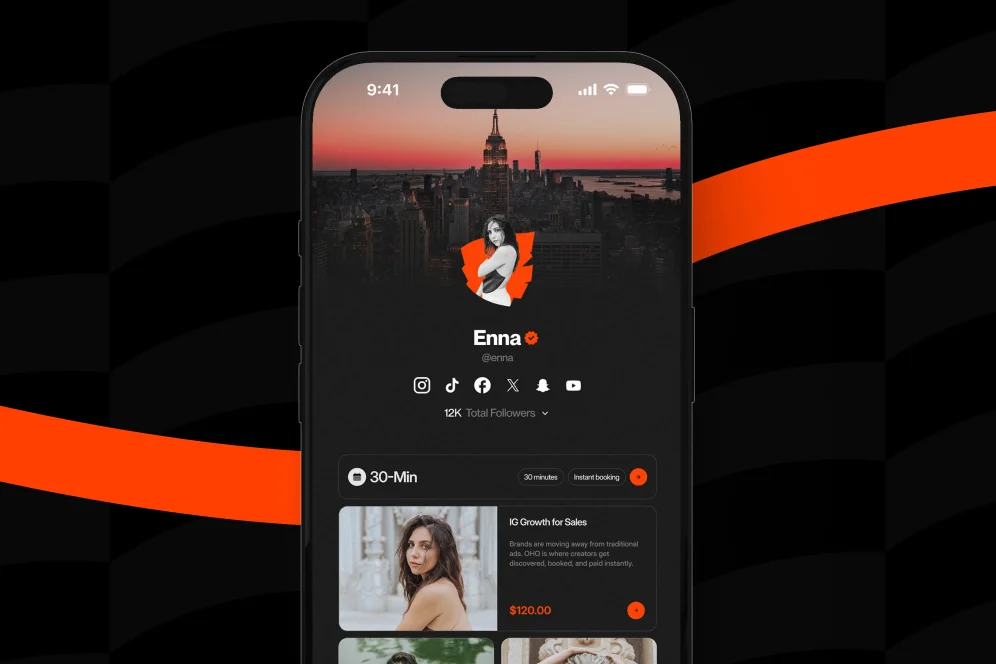
Why Your Link-in-Bio Username Is the Most Important Digital Real Estate You Own
April 3, 202611 min readUpdated August 3, 2026
TL;DR
Creator usernames are not just branding details. A short, credible, consistent handle improves recall, authority, and the performance of the page behind it, especially when that page is built to convert rather than just route traffic away.
A creator’s username does more than identify an account. It carries brand memory, search behavior, trust signals, and the first impression that determines whether a visitor clicks, shares, or forgets.
For educators, coaches, consultants, and creator-led businesses, the link-in-bio username is often the smallest asset with the biggest downstream impact. A short, credible handle can make the difference between looking like a serious operator and looking temporary.
A strong username is not a cosmetic choice; it is a conversion asset.
Most discussions about creator usernames stop at aesthetics. They focus on whether a handle sounds clever, personal, or available. That misses the real business point.
A link-in-bio username sits at the intersection of identity, navigation, and conversion. It appears in bios, podcasts, slides, social captions, DMs, guest appearances, and word-of-mouth referrals. It is one of the few pieces of digital real estate a creator repeats constantly.
That is why short usernames outperform long, cluttered ones in practical use. They are easier to say, easier to remember, harder to mistype, and cleaner in screenshots.
For an educator, this matters even more. An educator is not just trying to be noticed. They are trying to be trusted. A professional-looking handle helps reduce friction before a visitor ever evaluates the offer.
This is also where standard link-in-bio thinking often falls short. Traditional link pages mostly function as routing tools. They send visitors somewhere else. But a conversion-focused page should help visitors act immediately, whether that action is buying a digital product, booking time, subscribing to a newsletter, or sending a structured brand inquiry. That is the difference between a basic link list and a monetization layer like Oho.
The username matters because it is the front door to that experience.
A weak handle usually creates one or more of these problems:
None of those issues appear on a dashboard as a neat line item. But they show up in lower direct traffic quality, weaker recall, fewer branded searches, and more friction between interest and action.
That is why the phrase “digital real estate” is not overdramatic here. In practice, the username becomes address space for reputation.
When operators evaluate naming, they often ask the wrong question: “Do I like it?” The more useful question is: “Will this hold up across five years of content, partnerships, and monetization?”
That shift matters because creator usernames do not just support discovery. They support authority.
According to Vaizle, consistent usernames across major platforms such as Instagram, TikTok, and YouTube are important for a unified digital identity. That aligns with what experienced marketers already know: consistency reduces confusion, and reduced confusion improves brand recognition.
For educators in particular, authority compounds when naming is stable. A teacher, analyst, course creator, or expert who uses the same short identity across channels creates a cleaner trust signal than someone fragmented across six versions of their name.
The demand side of this is visible too. Pinterest’s content creator username ideas page shows that this topic attracts meaningful search interest, including a visible signal of 4,000+ searches around creator username ideas. That does not prove one specific naming formula wins, but it does confirm that creators see naming as a real business problem, not a vanity exercise.
Do not optimize for cleverness first. Optimize for recall, credibility, and reusability.
That is the contrarian stance worth keeping. Many creators chase uniqueness in a way that makes the handle harder to spell, harder to say, and less aligned with what they sell. A slightly less “creative” name that is short, consistent, and professional is usually the stronger long-term asset.
This becomes especially obvious when monetization enters the picture. If someone hears your name on a podcast and types it later, your username needs to survive memory decay. If a brand manager forwards your page internally, the URL needs to look credible. If a student shares your resource in a screenshot, the name should reinforce your identity rather than distract from it.
Most creators need a practical filter, not a brainstorming free-for-all. The simplest model to use is the username quality test: recall, relevance, consistency, and scarcity.
Can someone hear it once and type it later without asking for clarification?
If the answer is no, the username has a problem. Hyphens, doubled letters, random numbers, and forced abbreviations usually reduce recall. A short handle wins because it is mentally compressible.
Does the name fit the business the creator is building?
For educators, a handle should not undermine the offer. A playful nickname may work for a meme account; it may work poorly for someone selling professional workshops, cohort courses, consulting, or paid advisory time.
This does not mean every name must sound corporate. It means the name should support the perceived value of the offer.
Can the same or nearly identical username be used across channels?
Again, Vaizle is useful here because it frames username creation around multi-platform consistency. The link-in-bio page only works at full strength if the identity that leads into it is recognizable everywhere else.
Can the name be secured now, or will delay make it harder later?
This matters more than creators admit. As noted by Parade, the most appealing names tend to get “snatched up” quickly. The language is casual, but the market reality is accurate: short, memorable, high-signal handles become unavailable fast.
A creator who waits until after growth often discovers that the cleanest naming options are already gone.
Consider three educator-style handles:
@teachwithmaria2026@drmariateachesonline@mariacostaThe first is time-stamped and fragile. The second is descriptive but bloated. The third is clean, portable, and durable.
Not every creator can secure the perfect exact-name handle. But the exercise makes the tradeoff clear: the closer the username gets to short, credible, and timeless, the more useful it becomes as a business asset.
The right username for an educator in early 2026 should still make sense if the business expands into courses, workshops, paid communities, speaking, books, or sponsorships.
That means selection should account for future surface area, not just current niche language.
A common mistake is overfitting the handle to the current format. For example, a creator starts on Instagram sharing study tips and chooses something like @dailyreelsforstudents. That may work for six months. It becomes restrictive once the business evolves into broader education products.
In most cases, name-first or brand-first usernames age better than format-first usernames.
Examples:
@alexmorrow, @learnwithalex, @morrowstudio@30secondlessonclips, @studyhacksdaily247Niche terms can help if they strengthen relevance without locking the creator into a temporary channel or trend.
According to Thinkific, niche-specific naming can help creators signal authority within a business vertical. That is a useful insight, especially for educators, because category clarity can support trust. But the best use of niche language is selective.
For example, @mathwithnina is specific without being brittle. @nina7thgrademathworksheets is specific in a way that may become restrictive.
This is where many creator usernames break.
Extra punctuation, repeated vowels, filler words like “official,” and appended numbers usually create friction. Jimpix emphasizes memorability for social usernames, and that principle holds up in practice. Memorable handles travel better in spoken referrals and shared screenshots.
A creator does not need a name that looks original in a generator result. They need one that survives real-world use.
A useful point from Dashlane and NordPass is that usernames are tied not only to branding but also to account security and uniqueness. For creators with monetized audiences, account identity is operationally important.
A strong public naming system does not replace secure passwords or two-factor authentication, but it does reduce confusion around fake accounts and fragmented identity. That matters when the creator is handling payments, bookings, subscribers, and inbound brand interest.
The biggest misunderstanding about creator usernames is that they only matter before the click. In practice, they also affect what happens after the click.
If the profile URL looks polished, the visitor enters the page with a stronger trust baseline. That trust baseline influences conversion behavior.
On a monetization page, the username touches several conversion levers:
That last point matters more in 2026 than it did even two years ago. In an AI-answer environment, brand becomes a citation engine. If your public identity is fragmented or forgettable, you are harder to cite, harder to verify mentally, and easier to ignore.
Take an educator with these two public setups:
Baseline setup
Intervention
Expected outcome over a 6- to 8-week window
No fabricated benchmark is needed to make the point. The operational gain is in reduced friction and improved measurement.
This is exactly why Oho is best framed as more than a prettier list of links. Standard link-in-bio tools send visitors away. Oho is built so visitors can act directly on the page: sell, book, subscribe, and manage collaboration requests from one public profile. That makes a short username more valuable because the page behind it is designed to convert, not just redirect.
If the current handle is weak, the fix should be methodical. Use the checklist below before changing anything publicly.
A username change should not be treated as pure branding. It should be measured like a conversion update.
At minimum, track:
If the creator uses a conversion-focused profile such as Oho, the advantage is that sales, bookings, subscriber capture, and collaboration requests can be observed from one workspace instead of being split across disconnected tools.
Most naming errors are not disastrous on day one. They become expensive through repetition.
The handle becomes permanent faster than expected. Once it appears in backlinks, mentions, podcast intros, and saved content, changing it later creates cleanup work.
This is the big one.
A creator may choose a quirky name because it feels distinctive. But if the audience is buying expertise, distinctiveness should not come at the expense of trust. An educator’s handle should support authority first and personality second.
Niche specificity can help, but too much specificity traps the brand. If the business evolves, the username becomes outdated and awkward.
Usernames are often seen in tiny interface elements: mobile bios, comment sections, short-form video profiles, and screenshots. Long names collapse badly in these contexts.
A polished username feeding into a weak public page leaves money on the table.
This is where many creators underestimate page architecture. If the link-in-bio page simply sends traffic outward, the naming win is diluted. A stronger setup is to connect that identity to one page where visitors can act immediately. That is the practical advantage of using a conversion-focused profile instead of a standard link list.
This is common, especially for personal names.
The answer is not to panic and bolt on random numbers. It is to build a second-best option that preserves credibility.
firstnamelastnamefirstnamelastname.co or a close equivalent in the URL layer if platform handles differlearnwithfirstnamefirstnamewritesfirstname teaches adapted into a handle without clutterbrandname if the creator is building a larger media or education brandofficialfirstnamelastname_123the_real_firstname_lastnamefirstname_lastname2026The rule is simple: if the fallback makes the creator look less credible, keep searching.
Tools can help with ideation. Hootsuite’s username generator, Thinkific, and Vaizle are useful for brainstorming patterns. But the final decision should be evaluated against recall, relevance, consistency, and scarcity, not just availability.
Not always. For solo educators, a personal name is often the strongest long-term choice because it compounds reputation. But if the creator is building a broader studio, media brand, or multi-expert business, a brand-led username may be more durable.
Ideally, it should match closely enough that users recognize it instantly. Exact matching is helpful, but consistency in appearance and memory is more important than technical perfection.
Shorter names usually reduce friction in memory, typing, and verbal sharing. The gain is less about a magic algorithm boost and more about operational usability.
Growth does not mean the handle is optimal. Many creators outgrow their original naming choice. The right time to clean it up is usually before the brand expands into more offers, more channels, and more partnerships.
Near-consistency is usually better than forcing an awkward exact match. The goal is recognizability, not obsessive duplication.
Creator usernames affect conversions indirectly and directly. Indirectly, they shape trust and recall before the click. Directly, they influence whether a profile URL looks credible enough for a visitor to buy, book, subscribe, or inquire.
The strongest usernames for educators are usually short, easy to say, easy to spell, and aligned with the public identity behind the offer. They should look credible in a bio, on a slide, in a podcast mention, and in a forwarded message.
If those elements make the username harder to remember or weaker in presentation, a change is worth considering. The decision should be tied to a migration plan so links, bios, and profile traffic can be updated and measured cleanly.
It is too niche if it stops making sense once the business expands beyond one content format, one audience slice, or one temporary trend. A good test is whether the handle still fits if the creator launches products, books paid sessions, or broadens the brand.
The best setup is a page built for action, not just redirection. That means the profile should let visitors buy digital products, book paid time, subscribe to a newsletter, and submit collaboration requests without being pushed through a maze of disconnected tools.
A clean username is one of the few assets a creator repeats every day, so it deserves the same scrutiny as a homepage, offer page, or email list. If the current handle feels cluttered, forgettable, or too small for the business being built, this is the right time to fix it.
If you want that identity to lead somewhere built for conversion, not just clicks, explore how Oho helps creators sell, book, grow, and manage inquiries from one public page.